
What is a Belt Conveyor?
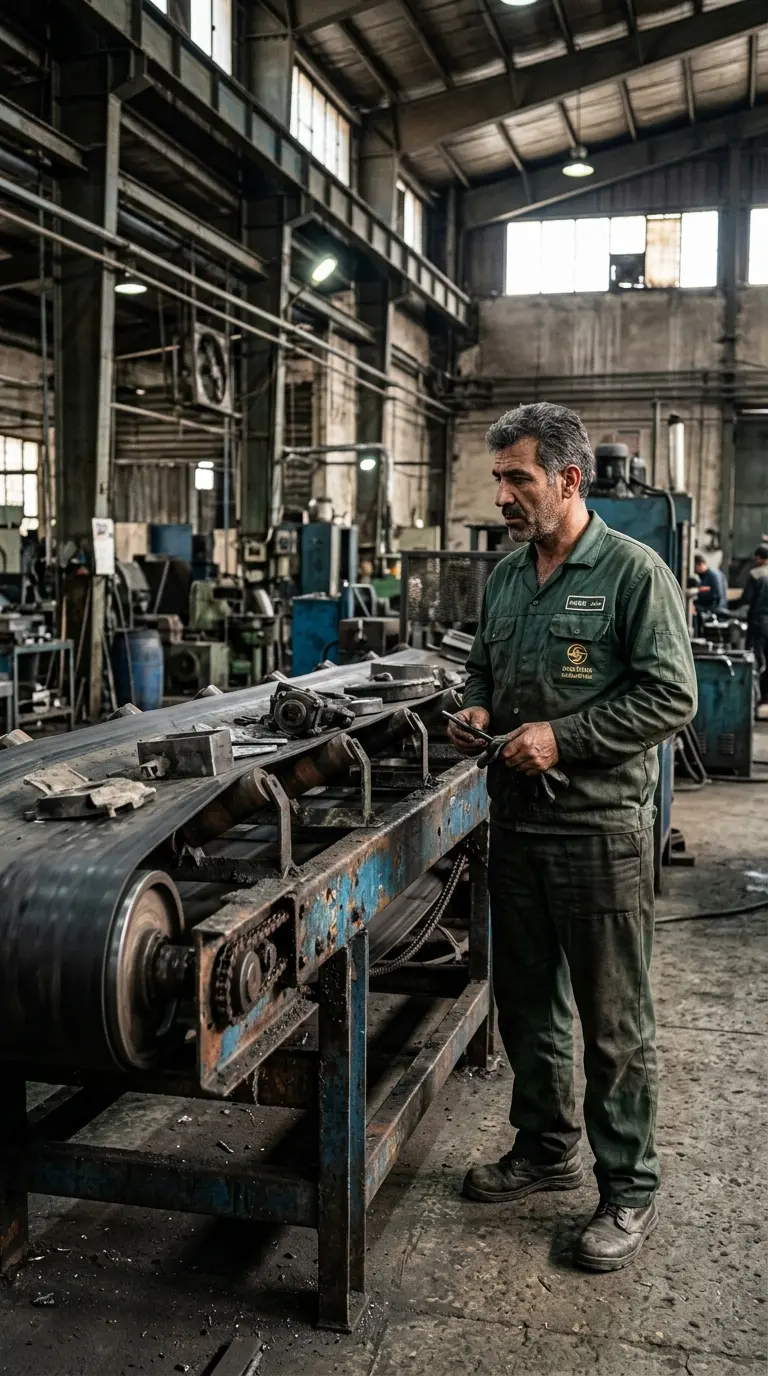
Belt Conveyor is one of the most common and widely used material handling equipment in various industries. This system consists of a rubber or PVC belt that moves over rollers, transporting materials from one point to another. The belt conveyor is known as the beating heart of material handling systems in many industrial production lines due to its simple structure, high efficiency, relatively low energy consumption, and ability to handle both bulk and packaged materials.
Main Components of a Belt Conveyor
A standard belt conveyor consists of the following parts:
- Belt
The belt is the load-bearing part of the equipment, usually made of durable rubber, PVC, or multi-layer fabrics. The type of belt is selected based on the material being conveyed (heavy, light, abrasive, hot, oily, etc.). - Rollers
Includes carry rollers on the upper section and return rollers on the lower section. Rollers are typically made of steel or galvanized steel. - Drums / Pulleys
Includes the drive drum (at the end of the conveyor) and the take-up drum (at the beginning or end). These sections are responsible for moving the belt and adjusting its tension. - Electric Motor and Gearbox
The main driving force for rotating the drive drum and consequently moving the belt. - Loading and Discharge Stations
Material entry and exit points, designed to prevent spillage and dust. - Belt Take-up System
Responsible for adjusting belt tension and preventing slack and slippage.
Types of Belt Conveyors Based on Application
|
Belt Conveyor Type |
Main Application |
|
Flat Belt |
Conveying packages, cartons, bags, lightweight parts in assembly lines |
|
Trough Belt |
Conveying bulk materials such as gravel, sand, cement, wheat, coal |
|
Portable Belt |
Temporary conveying in warehouses, truck and ship loading |
|
Heat-Resistant Belt |
With heat-resistant belt suitable for clinker, slag, materials above 150°C |
|
Oil and Chemical Resistant Belt |
With belt resistant to oil penetration and chemicals |
Advantages of Belt Conveyor
- High efficiency: up to 98% energy transfer efficiency
- Low maintenance cost: limited moving parts and simple repairs
- Versatile material handling: from fine powders to large stones and 50 kg bags
- Long service life: over 10 years with proper belt selection and regular maintenance
- Expandable length: up to several kilometers in mines and large industrial plants
- Reduced dust and noise pollution: compared to chain and screw conveyors
Disadvantages and Limitations
- Not suitable for very high-temperature materials (above 200°C) without special belts
- Susceptible to cuts and tears when exposed to sharp objects
- Relatively high initial cost for long-distance installations
Why Kian Sanat Belt Conveyor?
The company Kian Sanat, as the official representative of Ceylan Makina in Iran, designs, manufactures, and installs belt conveyors in accordance with the latest European standards. All components, including belts, rollers, idlers, gearboxes, and electric motors, are sourced from reputable European brands (Germany, Italy, Turkey). In addition, we provide free consultation, 3D simulation of the conveying line, 24-month warranty, and 10-year technical support.
The belt conveyor is a reliable, low-maintenance, and highly efficient solution for material handling in most industries. Proper selection of belt type, rollers, and electric motor has a direct impact on increasing production efficiency and reducing maintenance costs. For detailed technical specifications tailored to your production line, please contact Kian Sanat experts.
Applications of Belt Conveyors in Various Industries
|
Industry |
Application Example |
|
Cement and gypsum |
Clinker, gypsum stone, pozzolan, bagged cement handling |
|
Steel and metallurgy |
Iron ore, coke, high-temperature materials (with heat-resistant belt) |
|
Food and pharmaceutical |
Flour, sugar, grains, packaged products (with hygienic belt) |
|
Chemical and petrochemical |
Granules, chemical powders, 25 kg bags |
|
Agriculture and livestock |
Wheat, barley, corn, animal feed and poultry feed |
|
Mining and construction |
Stone, gravel, sand, clay, coal |
Important Factors in Selecting a Suitable Belt Conveyor
- Type of conveyed material: bulk density, angle of repose, material temperature, humidity, abrasiveness or stickiness
- Capacity (Throughput): amount of material per hour (tons/hour or cubic meters/hour)
- Conveying length and incline angle: maximum allowable angle for a standard belt is about 18 degrees (up to 30 degrees with cleated belts)
- Environmental conditions: dust, temperature, humidity, presence of chemicals
- Maintenance accessibility: access to rollers, idlers, and tensioning system
Recommended Technical Specifications for Industrial Belt Conveyors
|
Parameter |
Recommended Value |
|
Belt width |
400 to 2200 mm |
|
Linear speed |
0.5 to 5 m/s |
|
Capacity |
Up to 5000 tons/hour |
|
Motor power |
1 to 500 kW |
|
Belt type |
EP, NN, rubber, PVC, heat-resistant, oil-resistant |
|
Max incline angle |
0 to 30 degrees (depending on cleated belt type) |
📊 Capacity Calculator
Belt Conveyor Capacity (tons/hour)
🔧 Belt Tension Simulator
Calculate tension and remaining belt life